
By Which Couch Editorial · Published
Hybrid or memory foam?
The short version: foam for couples and light sleepers, hybrids for hot and heavier sleepers. The long version has a few surprises.

How they're built
A memory foam, or all-foam, mattress is a stack of foam layers. On top sits a soft, contouring comfort layer that moulds to your shoulders and hips. Underneath is a dense support foam that keeps your spine in line. Most Canadian online brands make an all-foam model, and it's usually their best-value mattress.
A hybrid swaps that dense base for a layer of individually wrapped pocket coils, then adds foam or latex on top. The coils give the mattress bounce, airflow and a firmer edge, while the top layers still provide pressure relief. Hybrids tend to be thicker, heavier and more expensive.
Side by side
Here's how the two types typically compare, based on how they're built. Individual models vary, so treat this as a starting point rather than a verdict.
| Memory foam | Hybrid | |
|---|---|---|
| Motion isolation | Excellent | Good |
| Cooling | Average | Very good |
| Edge support | Average | Very good |
| Bounce | Low | Medium to high |
| Weight (queen) | 30 to 40 kg | 45 to 55 kg |
| Typical queen price | $700 to $1,200 | $1,100 to $2,000 |
Motion, heat and edges
Memory foam's great strength is how still it stays. If your partner gets up at 5 a.m. or tosses around all night, foam absorbs that movement so you barely notice. Pocket coils do a good job too, since each coil moves on its own, but there's a little more transfer.
Heat is where hybrids pull ahead. Dense foam traps body heat, and while gel infusions and open-cell foams help, air moving freely through a coil layer helps more. If you wake up warm, or your bedroom gets stuffy in July, that difference is real.
Edge support sounds minor until you sit on the side of the bed every morning to pull on socks. Foam edges compress noticeably; hybrids often have reinforced perimeter coils that stay firm, which also makes the whole surface feel usable right to the edge.
Who should choose which
Choose memory foam if you share the bed with a restless partner, sleep lightly, sleep mostly on your side and enjoy a hugging, sink-in feel, or want the most comfort for your budget. Foam is also lighter, which makes it easier to rotate every few months and to carry up to a third-floor walk-up.
Choose a hybrid if you sleep hot, weigh over 100 kg, sit on the edge of the bed often, or find that foam makes it hard to change position during the night. Combination sleepers who flip between back, side and stomach usually prefer the easier movement of a hybrid too.
If you're somewhere in the middle, look at firmness before type. A medium-firm mattress suits most back and combination sleepers, while side sleepers usually do best a notch softer so their shoulders can sink in.
Latex, the third option
Latex mattresses sit between the two. Natural latex is bouncy like a hybrid, sleeps cooler than memory foam and is very durable, but it doesn't give that slow, sinking hug. Many Canadian hybrids use a thin latex layer on top for exactly this reason. All-latex mattresses are heavy and pricey, so they're a niche choice, but they're worth a look if you want something natural and long-lasting.
How to read a mattress spec sheet
Brands love invented names for their foams, so look past them to the numbers. Firmness is usually given on a 1 to 10 scale, where 6 to 7 is medium-firm. For foam, density in kilograms per cubic metre tells you more about lifespan than any marketing claim: support foam above about 28 kg/m³ and memory foam above about 50 kg/m³ are good signs. For hybrids, check the coil count for a queen (700 or more is solid) and whether the edges are reinforced. Every mattress page on Which Couch lists the specs each brand publishes, side by side, so you can compare like with like.
Durability, delivery and trials
One of the surprises: a hybrid doesn't automatically last longer. Durability depends mainly on foam density. A foam mattress with high-density support foam can comfortably outlast a cheap hybrid with thin comfort layers. Look for the foam density in the specs when the brand publishes it, and a warranty of at least ten years.
Both types now ship compressed in a box in Canada, so delivery is easy either way, but a hybrid box can weigh over 50 kg. It's a two-person job up the stairs. Most Canadian brands offer trials of 100 nights or more, which is the real safety net: give any new mattress at least three or four weeks before you judge it, because your body needs time to adjust.
Questions
Products mentioned in this guide
 Made in Canada
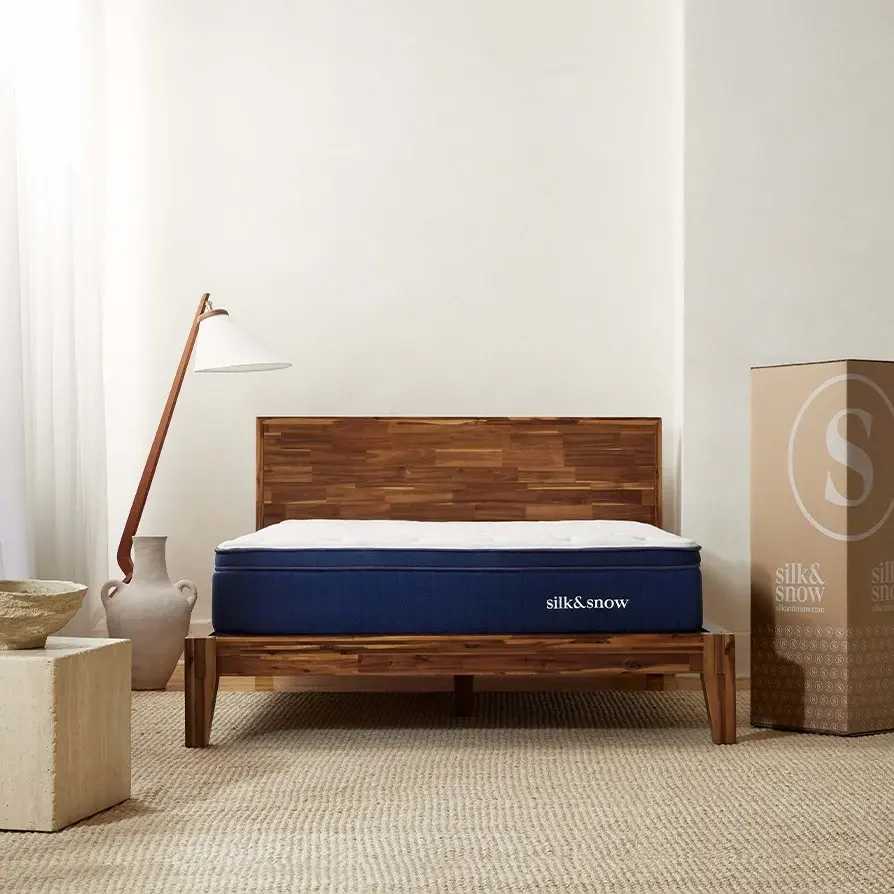
 Silk & Snow · Hybrid
Hybrid Mattress
8.5 out of 10- Made in Canada
A boxed, Canadian-made hybrid with memory foam over pocketed coils and a trial you can take at home.
33 cm thick · firmness 6/10
$1,003was $1,180−15%Queen
 Made in Canada
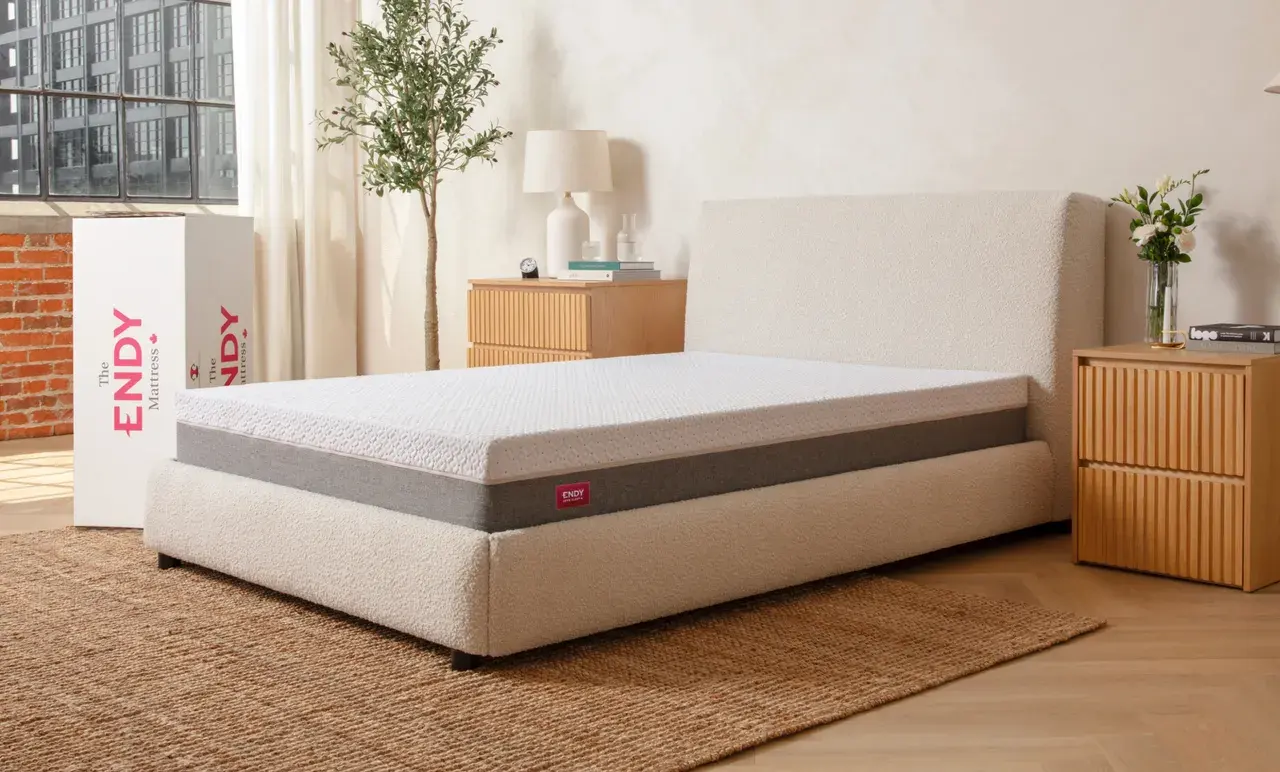
 Endy · Memory foam
Mattress
8.2 out of 10- Made in Canada
- Washable covers
A Canadian-made all-foam mattress with a washable cover, in three firmness choices and a 365-night trial.
25.4 cm thick · firmness 6/10
$895Queen
 Made in Canada
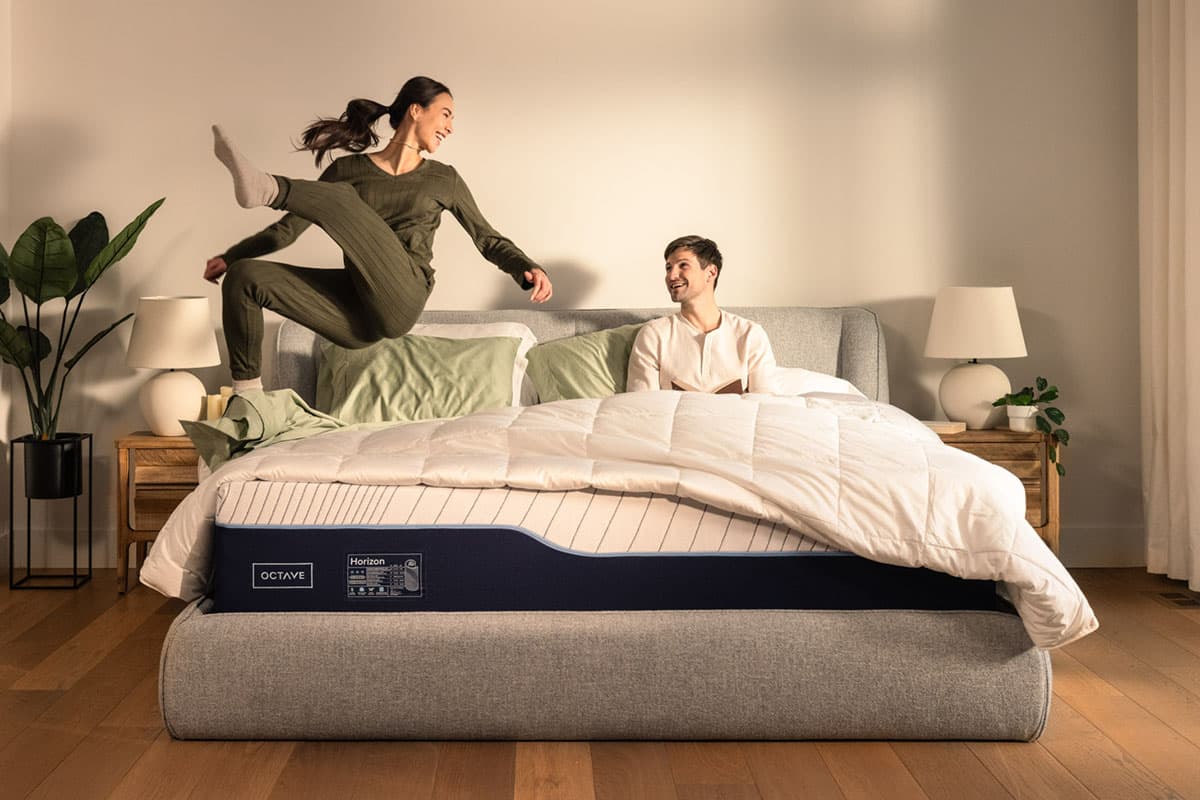
 Octave · Memory foam
Vista Mattress
8.2 out of 10- Made in Canada
- 365-night trial
A 30.5 cm Canadian-made foam mattress with cooling and pressure-relief foam, built with side sleepers in mind.
30.5 cm thick · firmness 6.5/10
$1,099Queen